
The AI Productivity Curve Nobody Warns You About
Most businesses expect AI to save time immediately. That is not how it works.
Before it gets better, it gets harder.
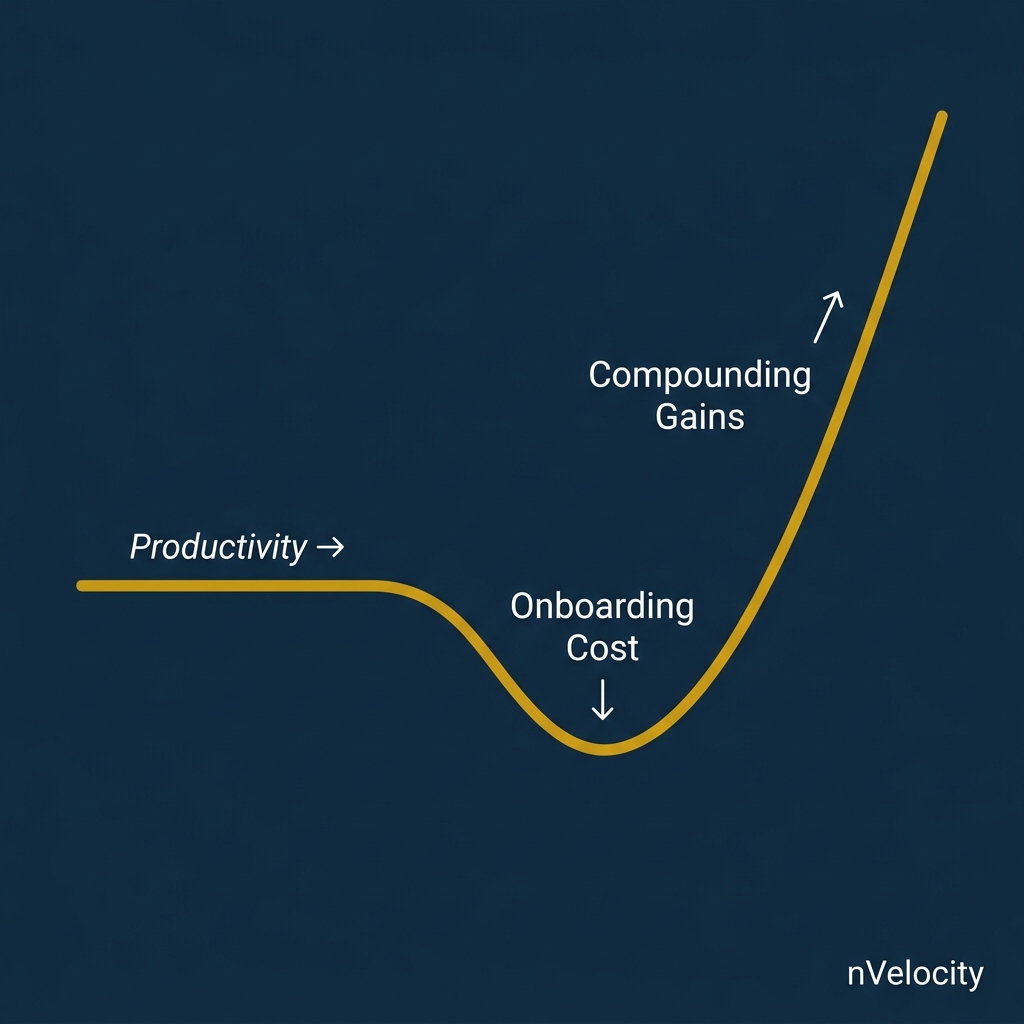
The onboarding phase is a net negative
Documenting processes, testing outputs, training your team, approving new workflows — all of that happens on top of your existing workload. You are doing your normal job plus the structural work required to make AI useful. For a few weeks, or a few months depending on your starting point, you are working more, not less.
This is where most implementations stall. Leadership expected a quick win. The team is exhausted. Someone says it is not worth it. The tools get shelved.
That is the worst possible time to stop.
Because the curve flips
Week one of meaningful results: you save 5 hours. You reinvest some of that time to improve the next workflow. Week two: 10 hours. Week three: 15. Each improvement compounds the last. The processes mature. The guardrails tighten. The outputs become reliable enough that your team stops checking everything twice.
Then something shifts. The low-value work stops taking your time. Reporting, formatting, chasing, pulling data. Gone. What you get back is not free time. It is capacity for the work that matters.
Strategy. Client relationships. Revenue. The high-value work that was always there but never had space to breathe.
This is the curve to expect
A short-term increase in effort followed by incremental, compounded, measurable gains in productivity and results.
The businesses that get this wrong either expect it to be easy from day one, or they give up during the hard part before the curve turns.
The ones that get it right build the foundation properly, stay in through the onboarding cost, and come out the other side with a structural advantage that is very difficult to replicate quickly.